
Introduction to Vonnegut's writing:
Beloved by many, Kurt Vonnegut is no doubt one of the most distinctive voices in the twentieth-century contemporary literature, celebrated for his unique blend of satire, science fiction and dark comedy, but most importantly by his compassionate humanism. His novels often explore the absurdities of modern life, the dangers of technology, the failures of political systems, and the devastating consequences of war, and remain particularly relevant nowadays.
The project description and rationale:
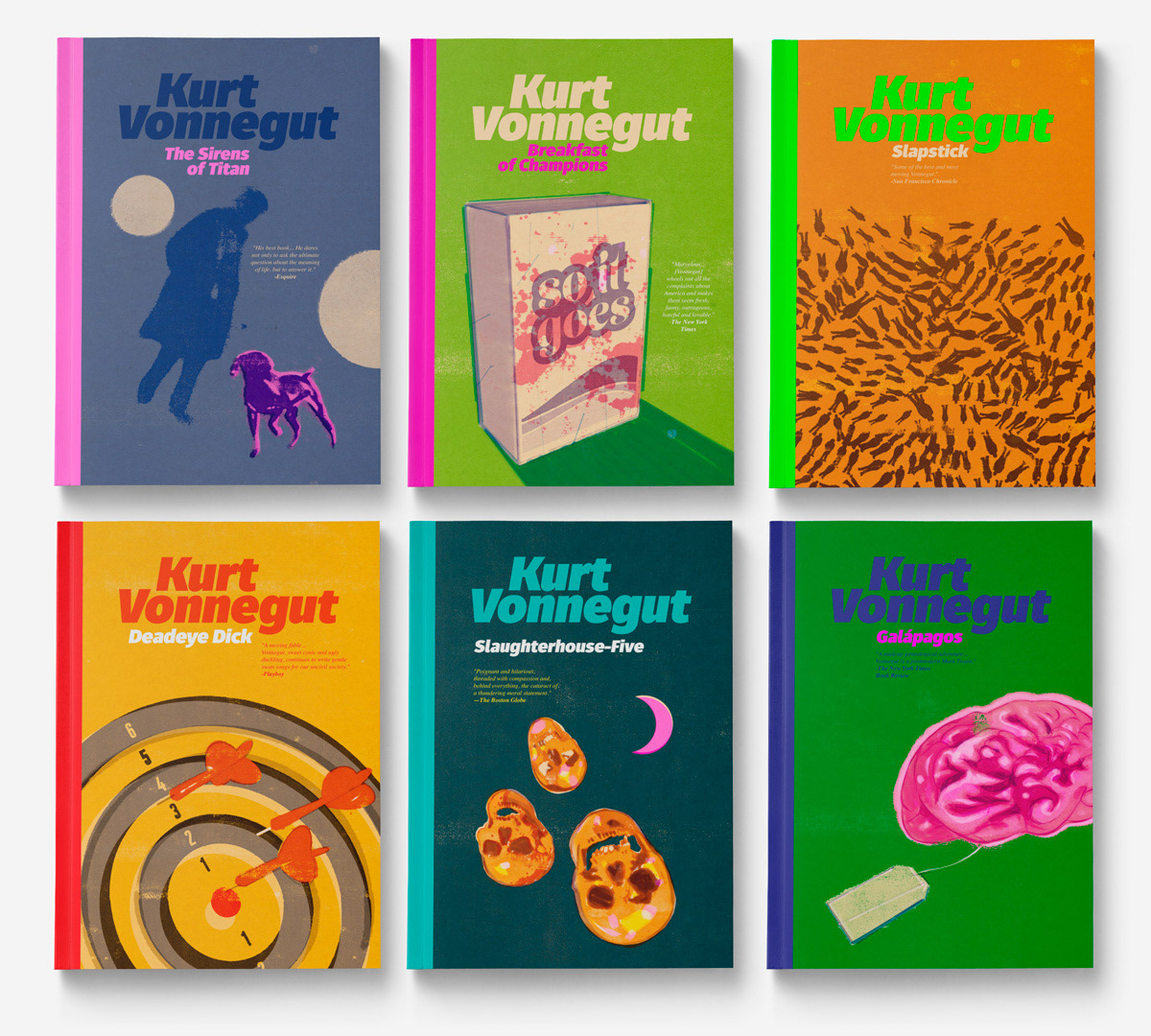
For this project, I wanted to create a unique visual identity that captures Vonnegut’s wit, absurdity, and penetrating empathy for humankind in a simple style that reveals hidden depth at a second look.
I went with vibrant, high-contrast colour palettes to reinforce the satirical energy and unconventional nature of the novels, ensuring the covers felt striking and memorable. At the same time, I wanted the overall aesthetic to remain approachable rather than intimidating.
I went with vibrant, high-contrast colour palettes to reinforce the satirical energy and unconventional nature of the novels, ensuring the covers felt striking and memorable. At the same time, I wanted the overall aesthetic to remain approachable rather than intimidating.
Rather than rely on photographic imagery or impersonal digital graphics, I drew the illustrations by hand in Procreate and added several filters and textures to retain a rough, sketch-like quality reminiscent of the pop art aesthetics, capturing the author’s colourful yet straightforward style.
Each illustration communicates a key concept from the novel in a metaphorical way, like for example. That said, I was careful not to become overly literal or revealing too much of the story.
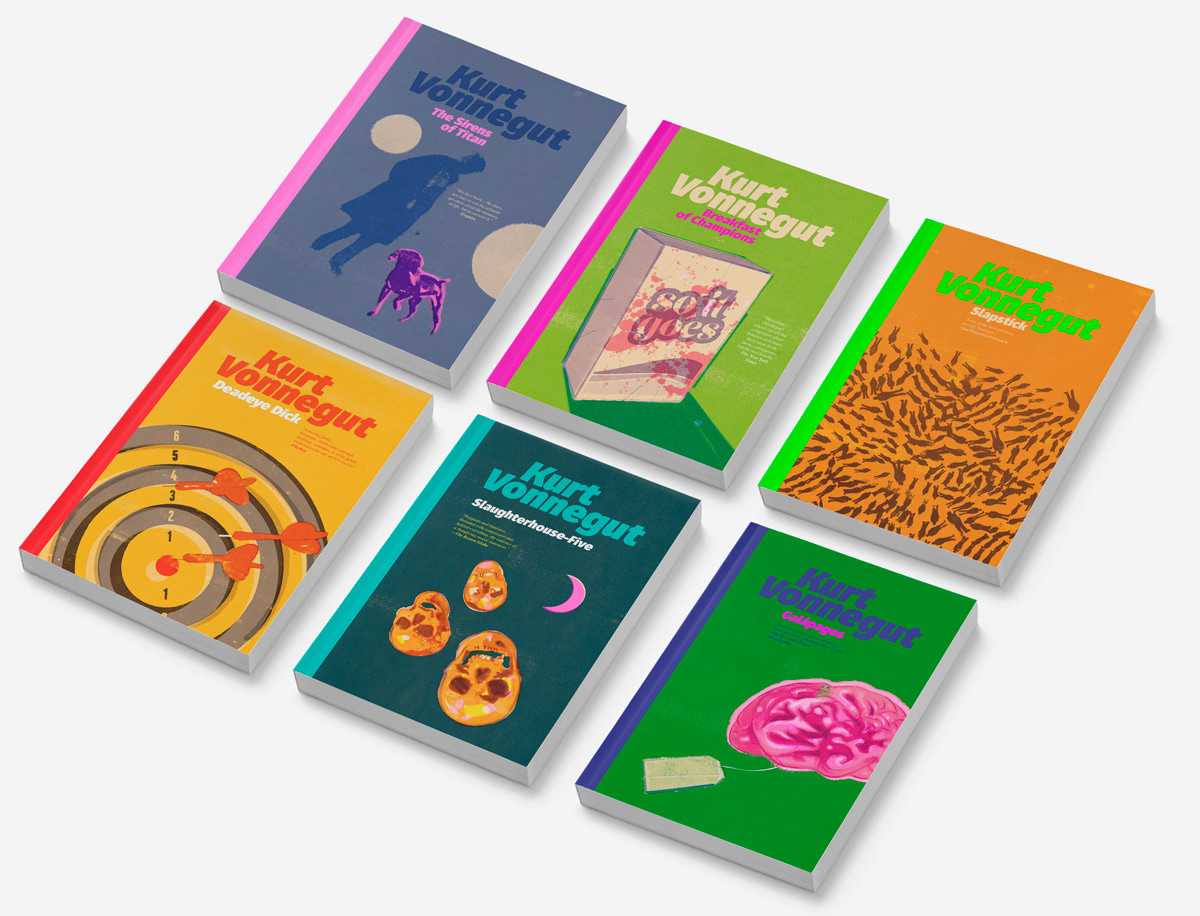

Typography played equally important role in establishing the look and feel. I decided to treat Vonnegut’s name almost as a logo, to create an instant recognition and a strong shelf presence. The oversized lettering reflects the confidence and distinctive voice of the author, while also unifying the series despite the varied subject of the books.
By balancing expressive hand-drawn imagery, strong typography and contrasting colours with clear conceptual references to each story, the covers seek to honour the complexity of Vonnegut’s work while making the books feel inviting to both new and long-time readers.
The Sirens of Titan
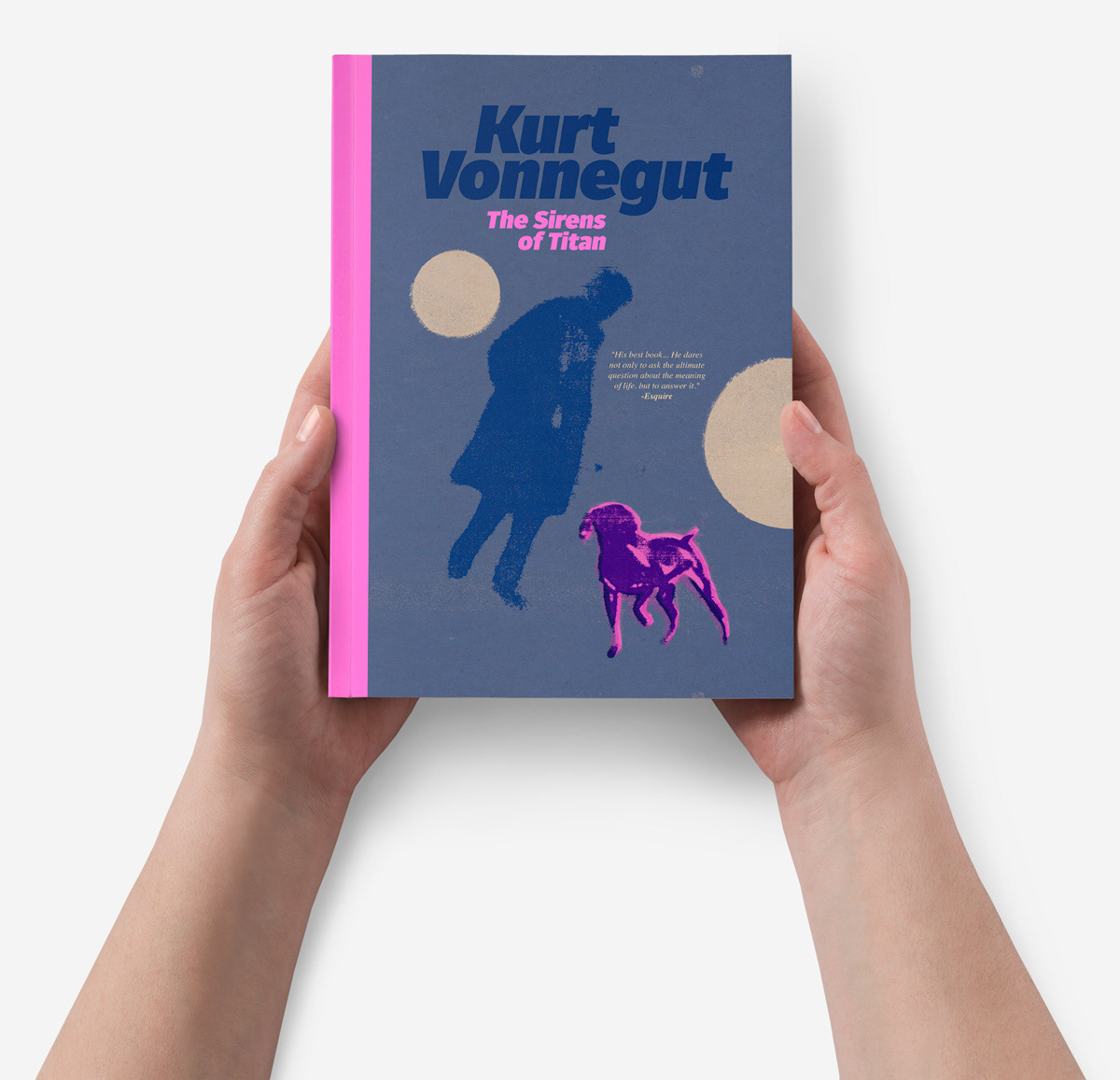
The Sirens of Titan is one of Vonnegut's earliest and most influential novels. It follows the wealthy and aimless Malachi Constant as he is swept into an extraordinary journey across Earth, Mars, Mercury, and beyond. Along the way, he becomes entangled in a cosmic scheme that challenges conventional ideas about free will, destiny, and human significance.
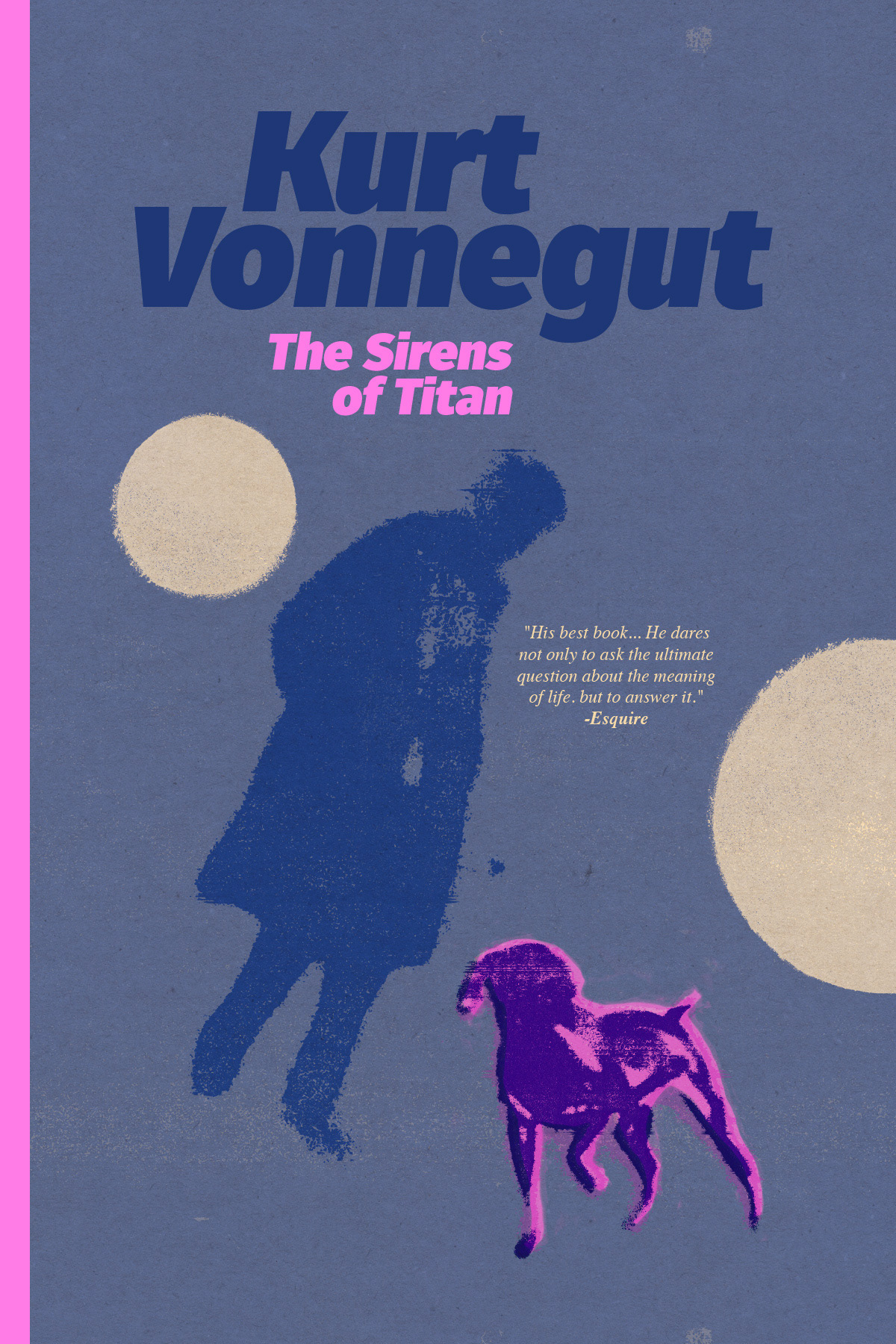
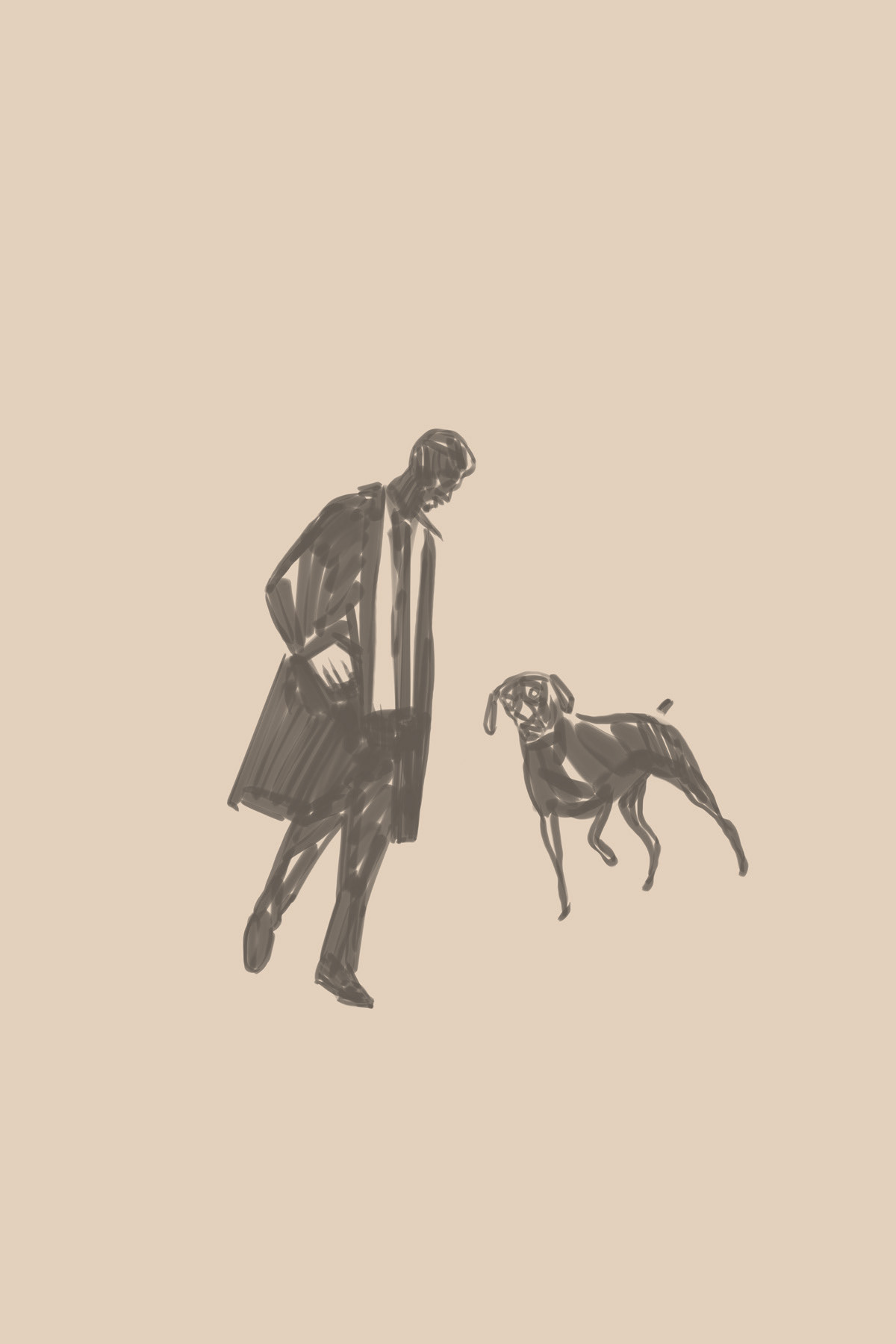
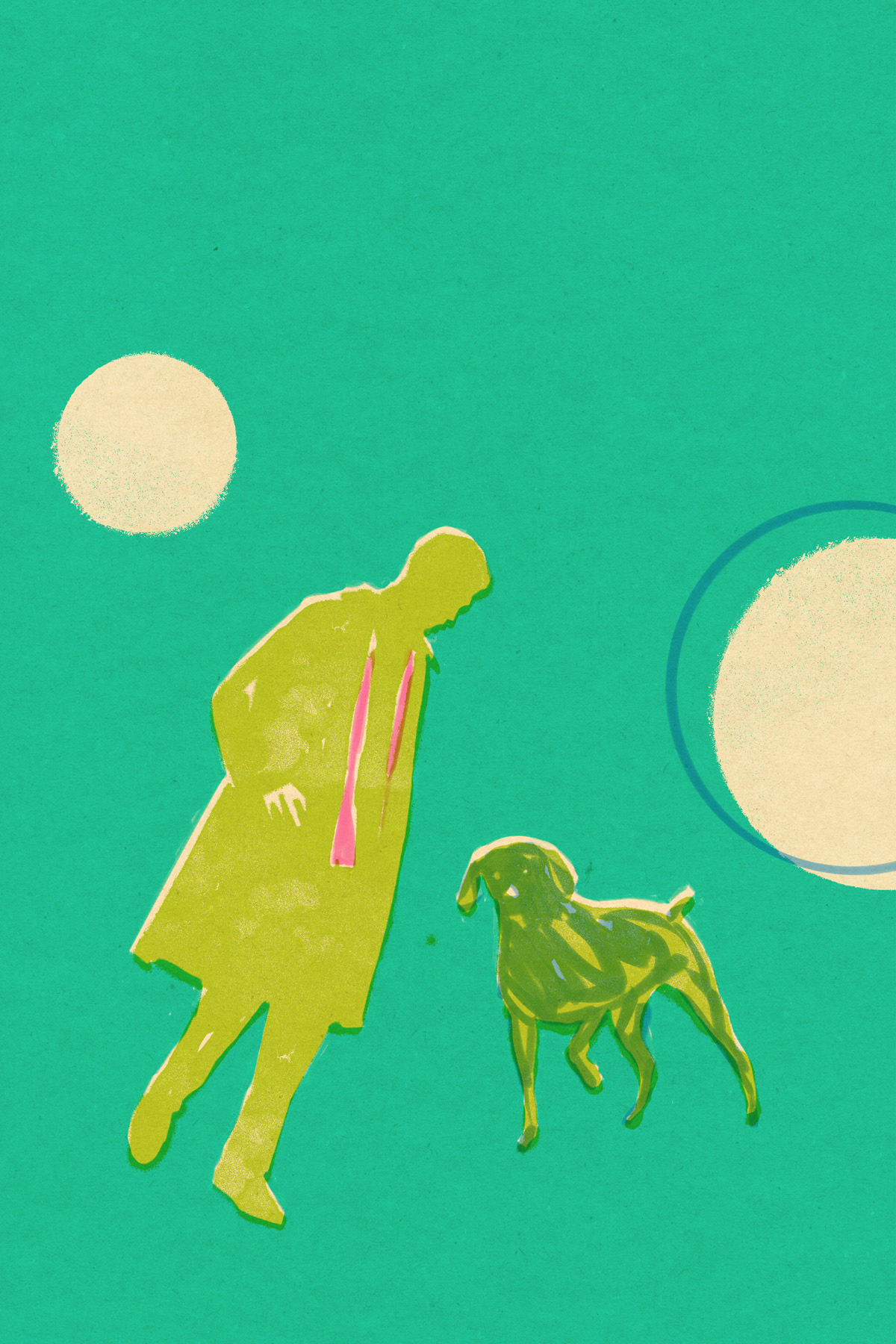
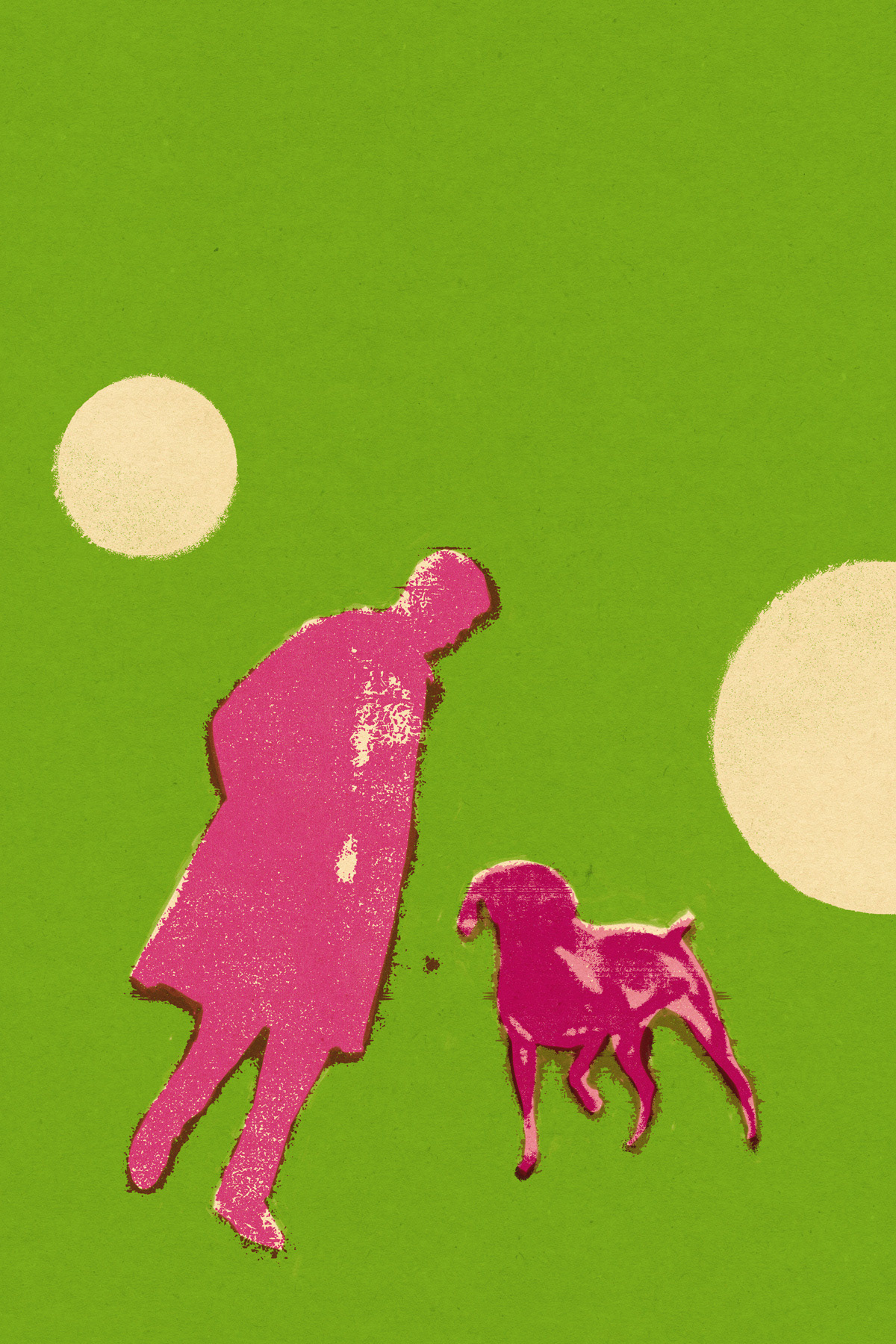
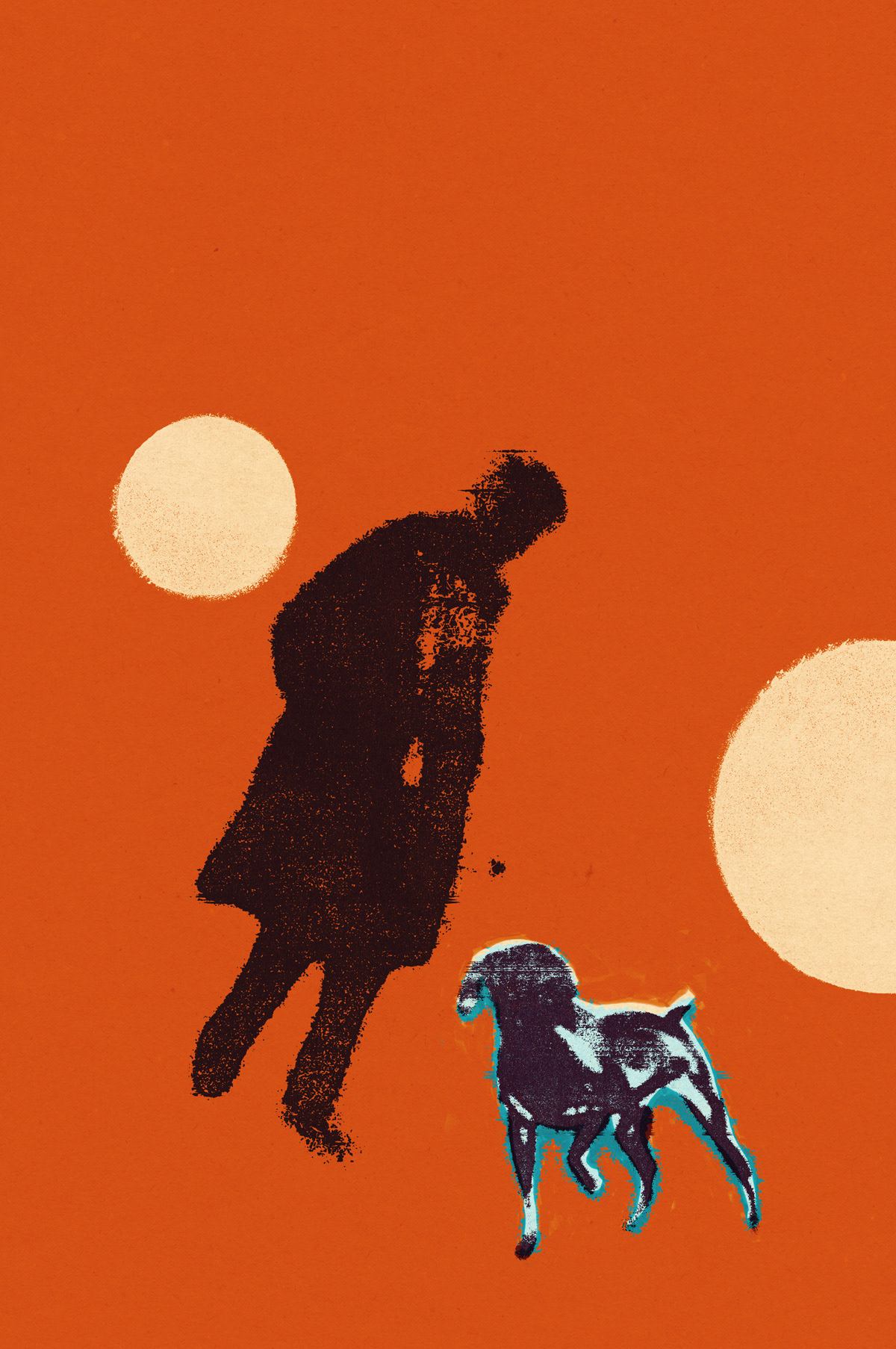
The cover depicts Winston Niles Rumfoord and his dog, Kazak, who — due to a cosmic accident turn a celestial anomaly stretched between the stars. Rumfoord and Kazak float in physical space, materialising out of thin air for about an hour every 59 days at the Rumfoord estate, being a unifying arch of the story.
Below: the initial drawing, an example with filters added and alternative versions
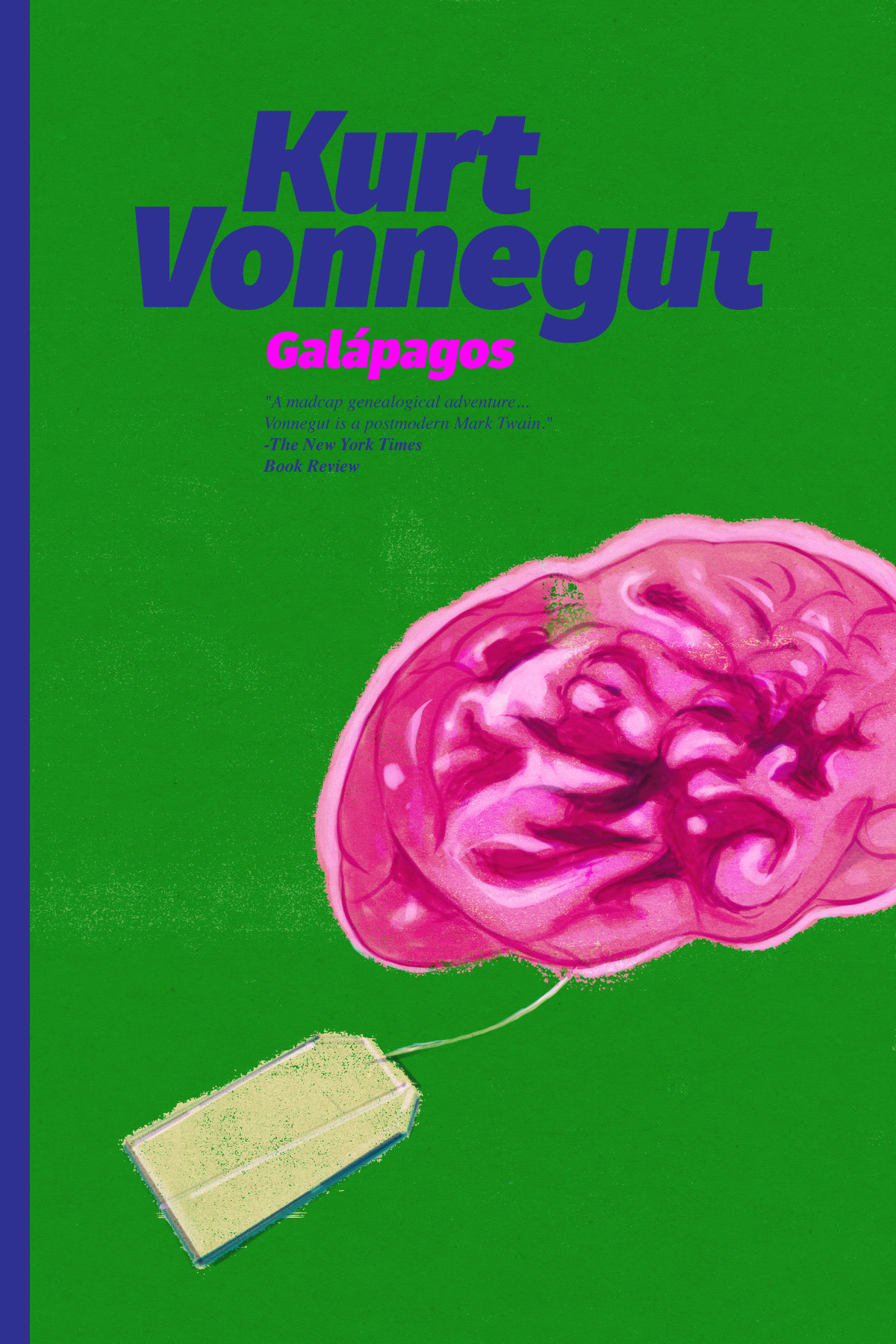
Galápagos
Galápagos is one of Vonnegut's most ambitious explorations of human evolution and the limitations of human intelligence. Galápagos follows a small group of survivors who become stranded on the Galápagos Islands after a global financial collapse and a series of catastrophic events.
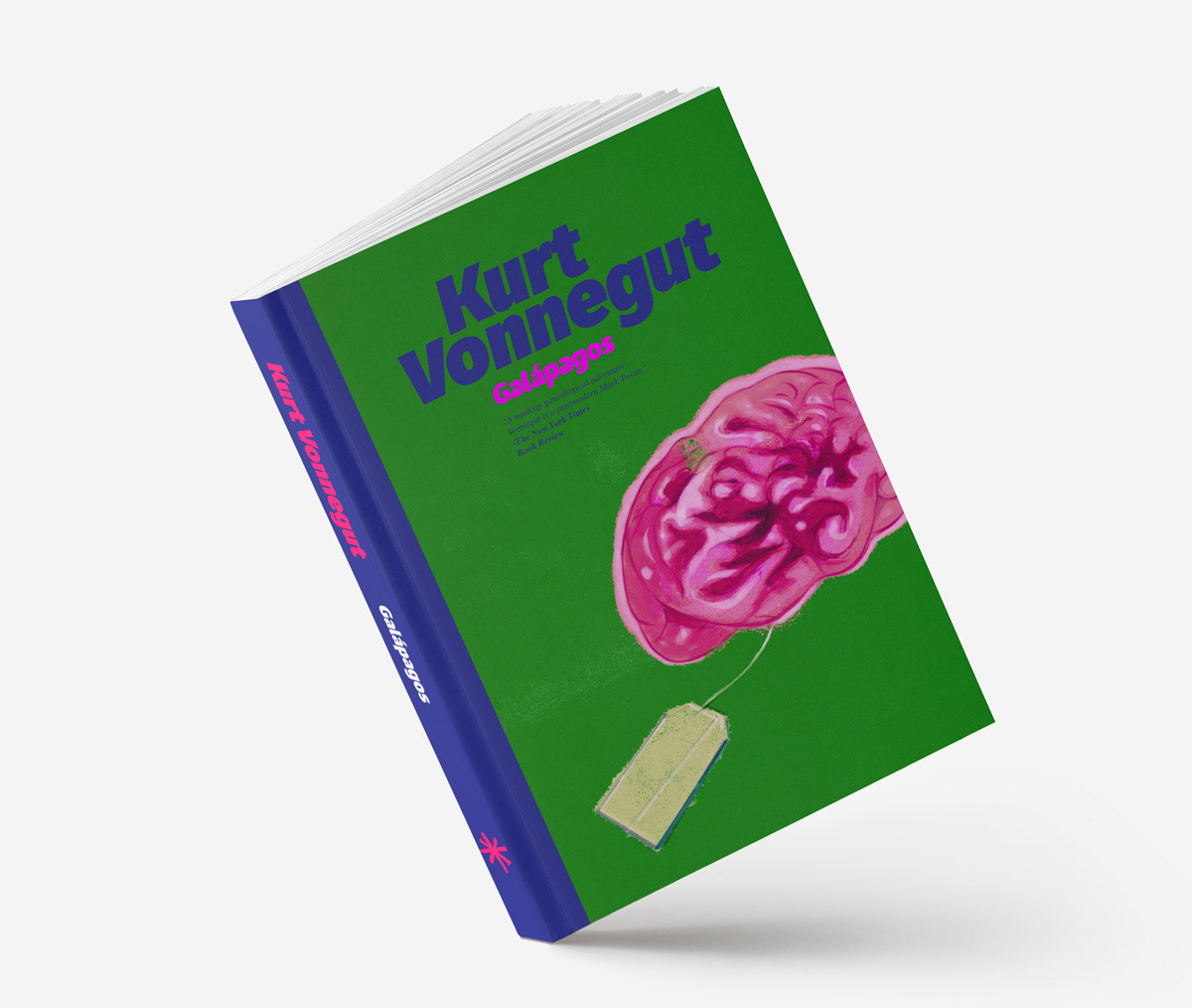
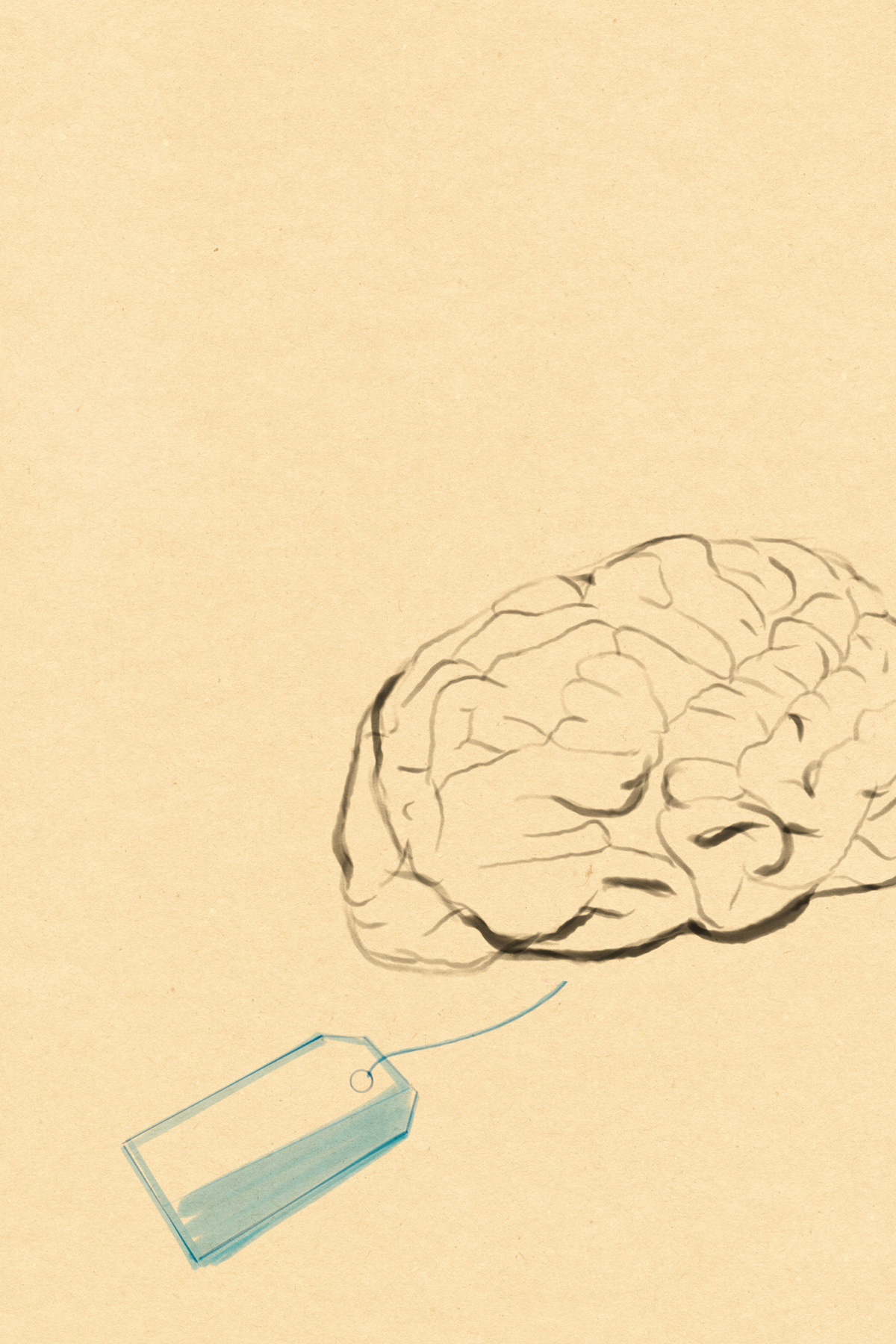
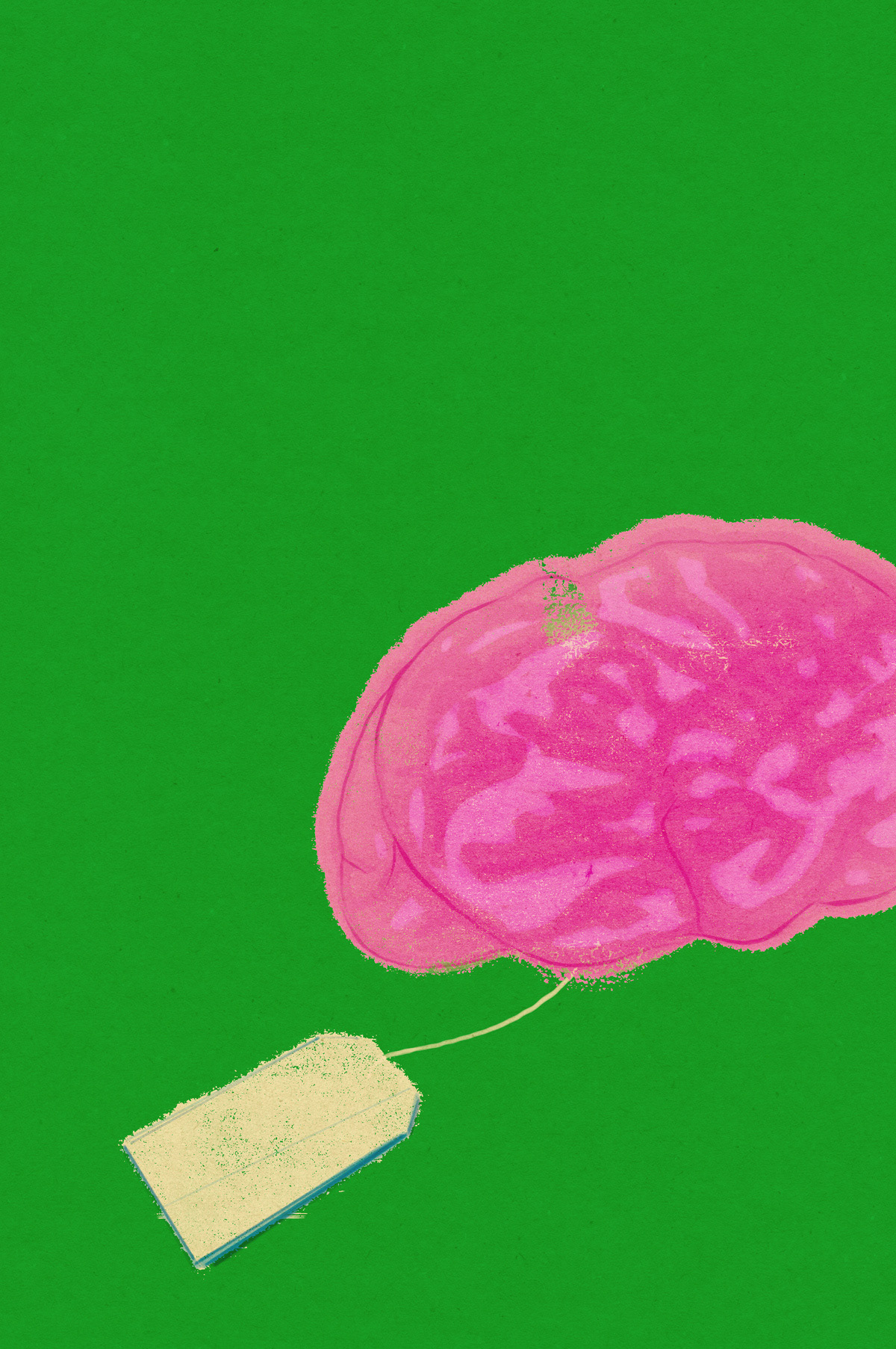
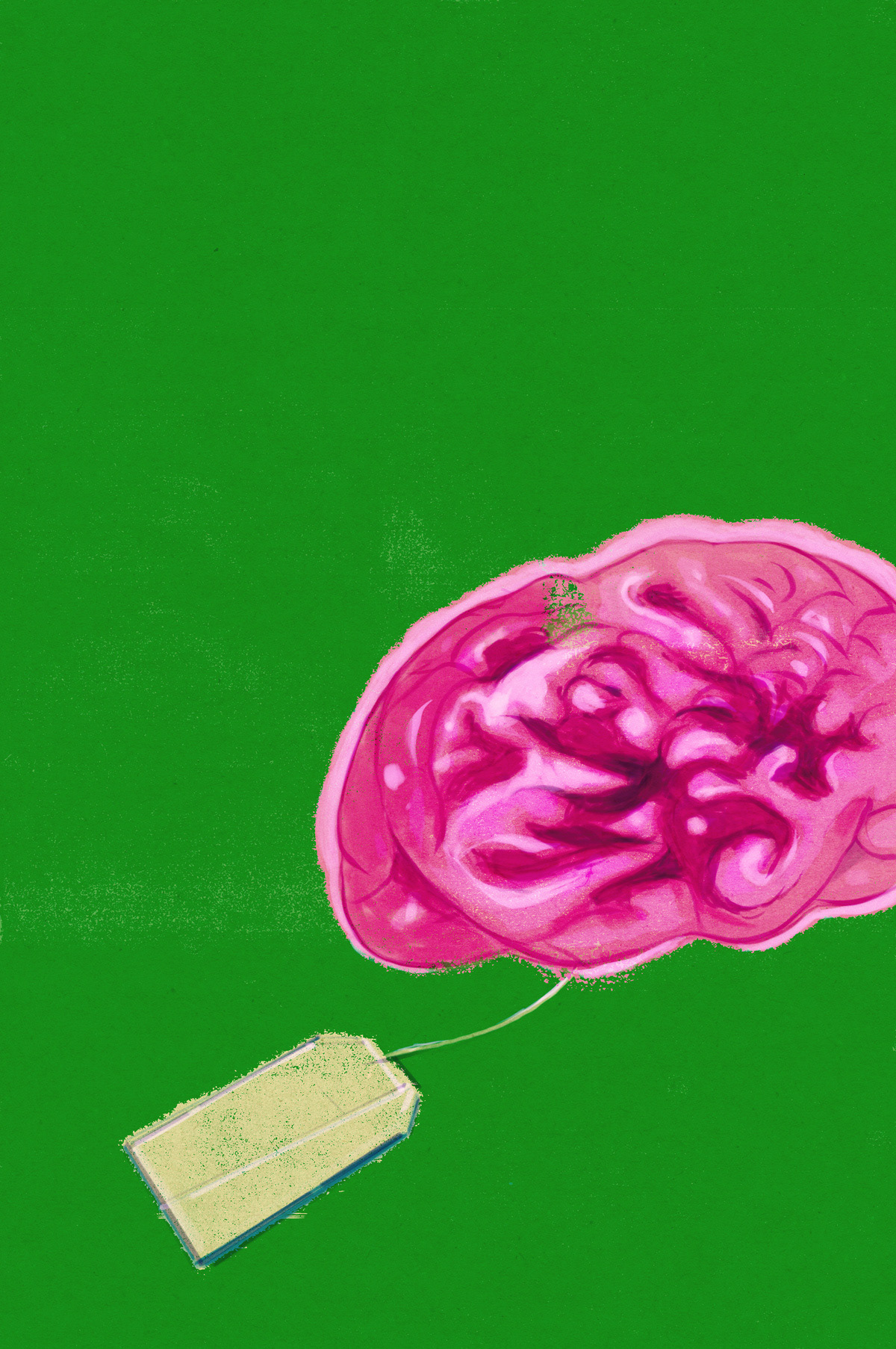
The novel suggests that many of humanity's greatest problems stem from its oversized brains and the destructive ambitions they produce. Because the story presents a vision in which the traits that once defined human civilisation gradually disappear, to illustrate the concept, I used an image of the brain with a price tag attached.
Below: the initial illustration and subsequent versions with colour and filters applied. The final illustration has been further reworked in Procreate
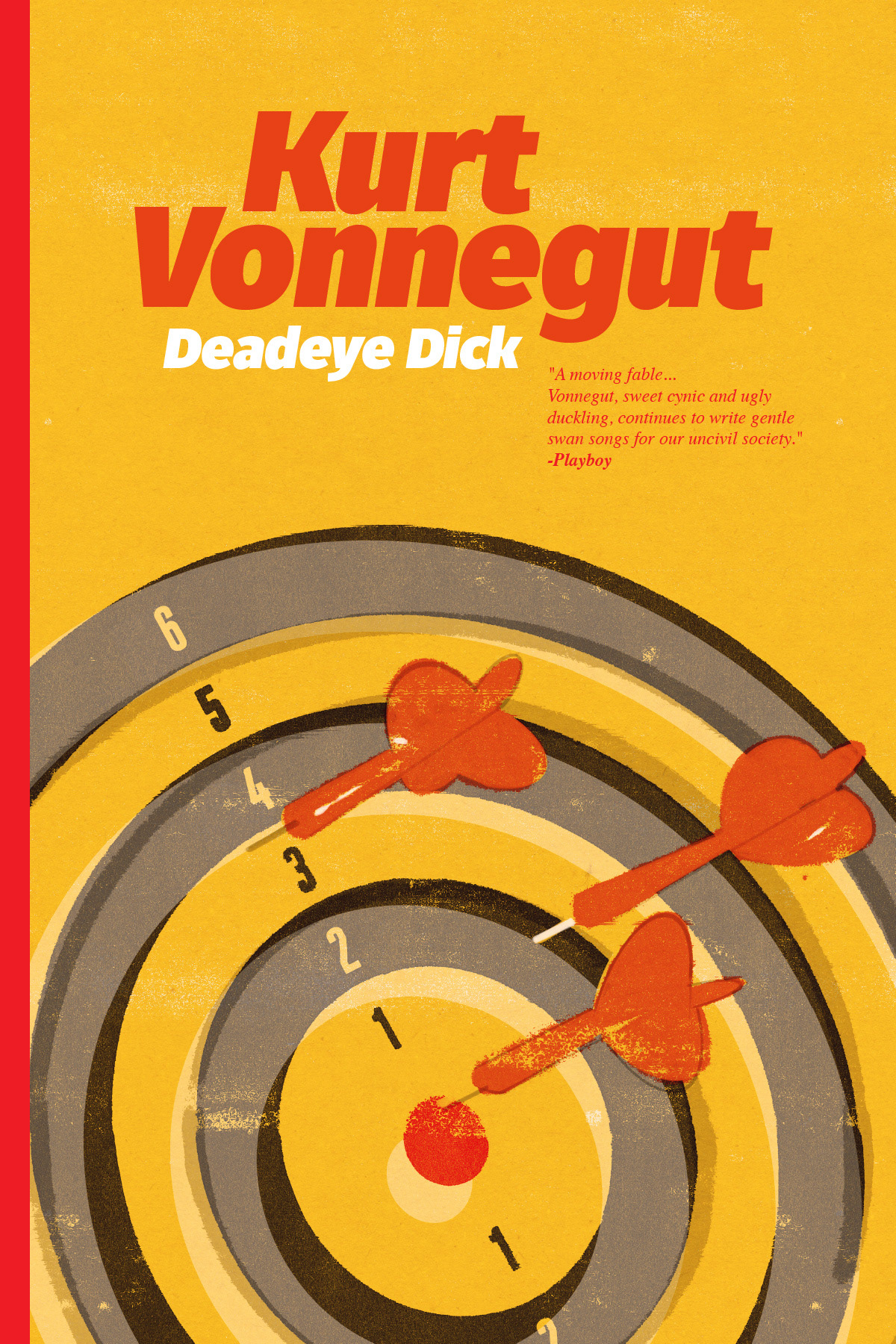
Deadeye Dick

Deadeye Dick tells the story of Rudy Waltz, a man whose life is permanently altered when, as a child, he accidentally kills a pregnant woman with a rifle shot. The novel follows Rudy's attempts to live with the consequences of this tragedy while navigating the social and political upheavals of the twentieth century.
The illustration depicts a target with reverted numbers; the lowest value appears right in the middle and increases as the circles widen. Easy to miss at first glance detail emphasises the discrepancy between one’s aims and rewards (or punishments) by fate.
Below: a vector target created in Illustrator, and the hand-drawn darts superimposed on the initial graphic, followed by the final version with filtered applied.



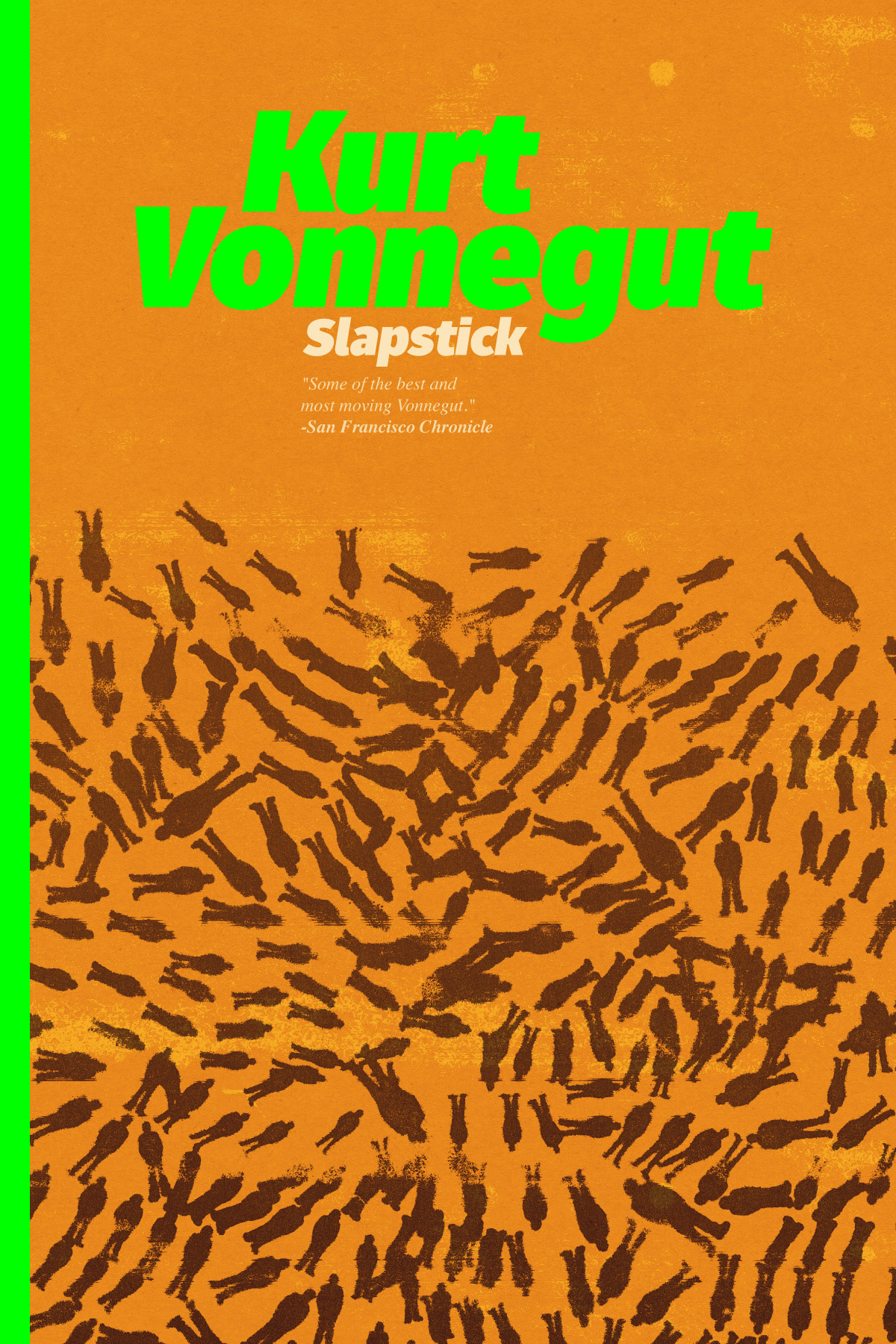
Slapstick
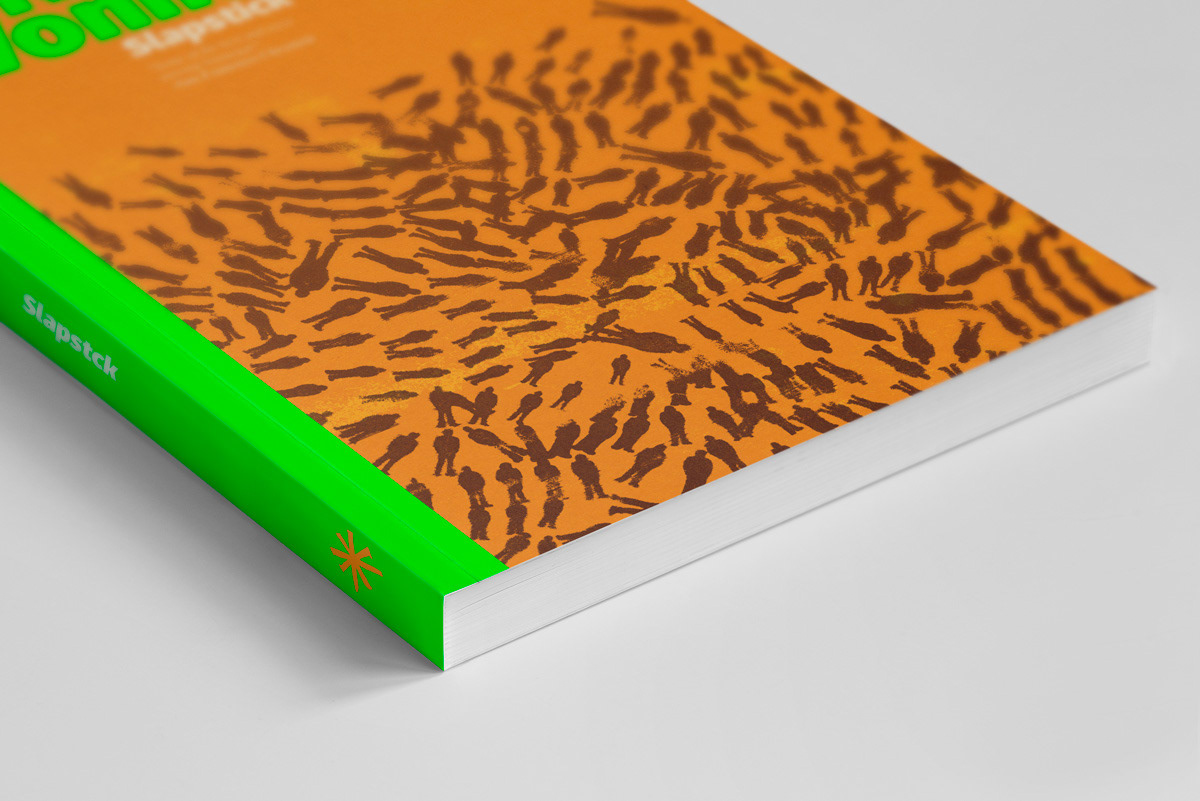
Slapstick, or Lonesome No More! is centred on Wilbur Daffodil-11 Swain, the last President of the United States. Looking back on his life in a fragmented and decaying future America, Wilbur recounts his unusual childhood, his relationship with his twin sister, and the social experiments that shaped the nation.
The cover relates to the novel’s sub-plot - having mastered the art of miniaturisation, the Chinese keep making themselves smaller and smaller, eventually becoming a dominant, hyper-advanced economic and scientific superpower. In the end, they become so small and numerous, they morph into terrifying hurricanes made of sub-atomic tiny people.
Slaughterhouse-Five

Widely regarded as Vonnegut's masterpiece, Slaughterhouse-Five is a semi-autobiographical novel based on Vonnegut’s experiences as a prisoner of war during the Allied bombing of Dresden in World War II. The story follows Billy Pilgrim, a man who becomes ‘unstuck in time,’ experiencing moments from his life out of chronological order while also encountering extraterrestrial beings known as Tralfamadorians.
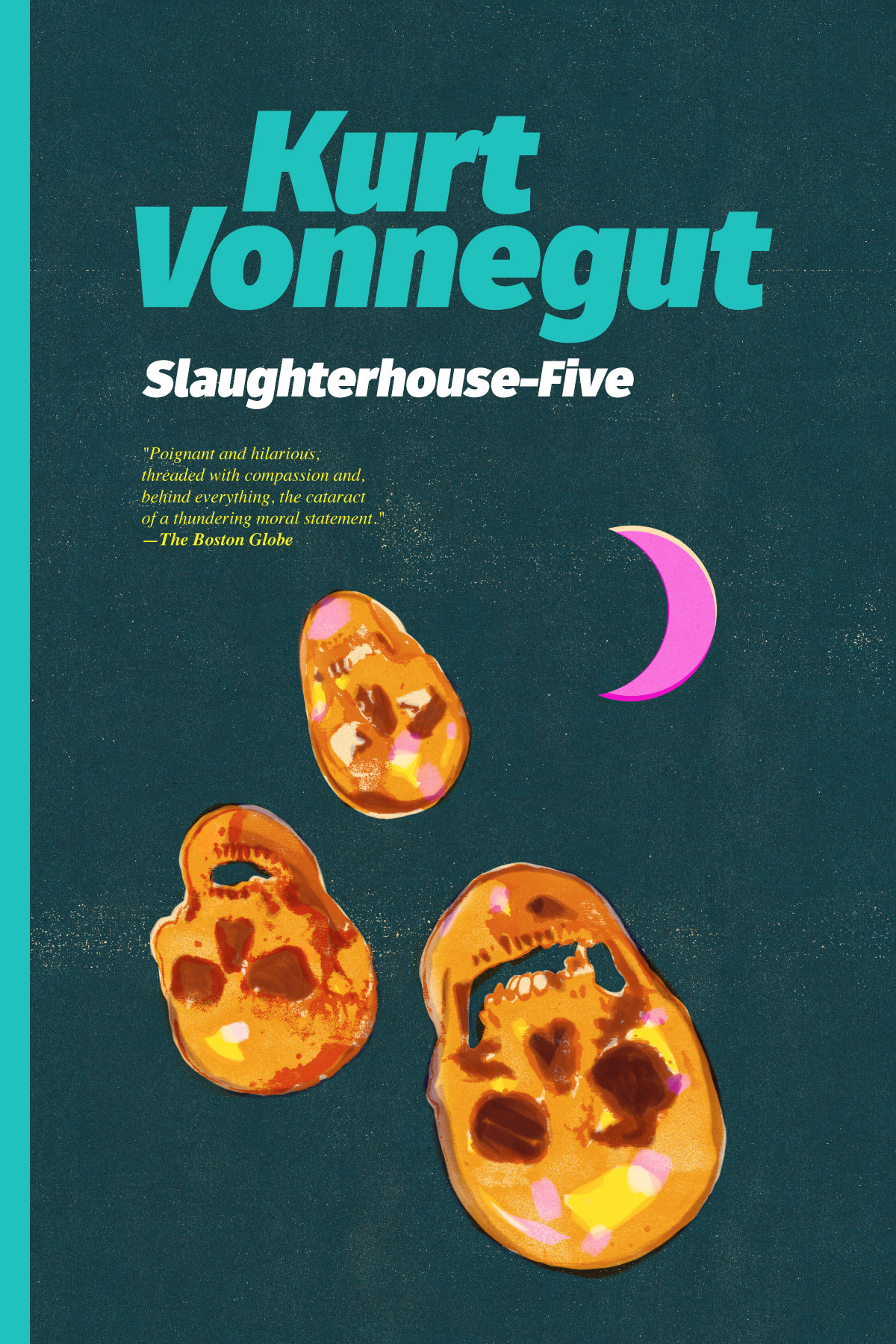
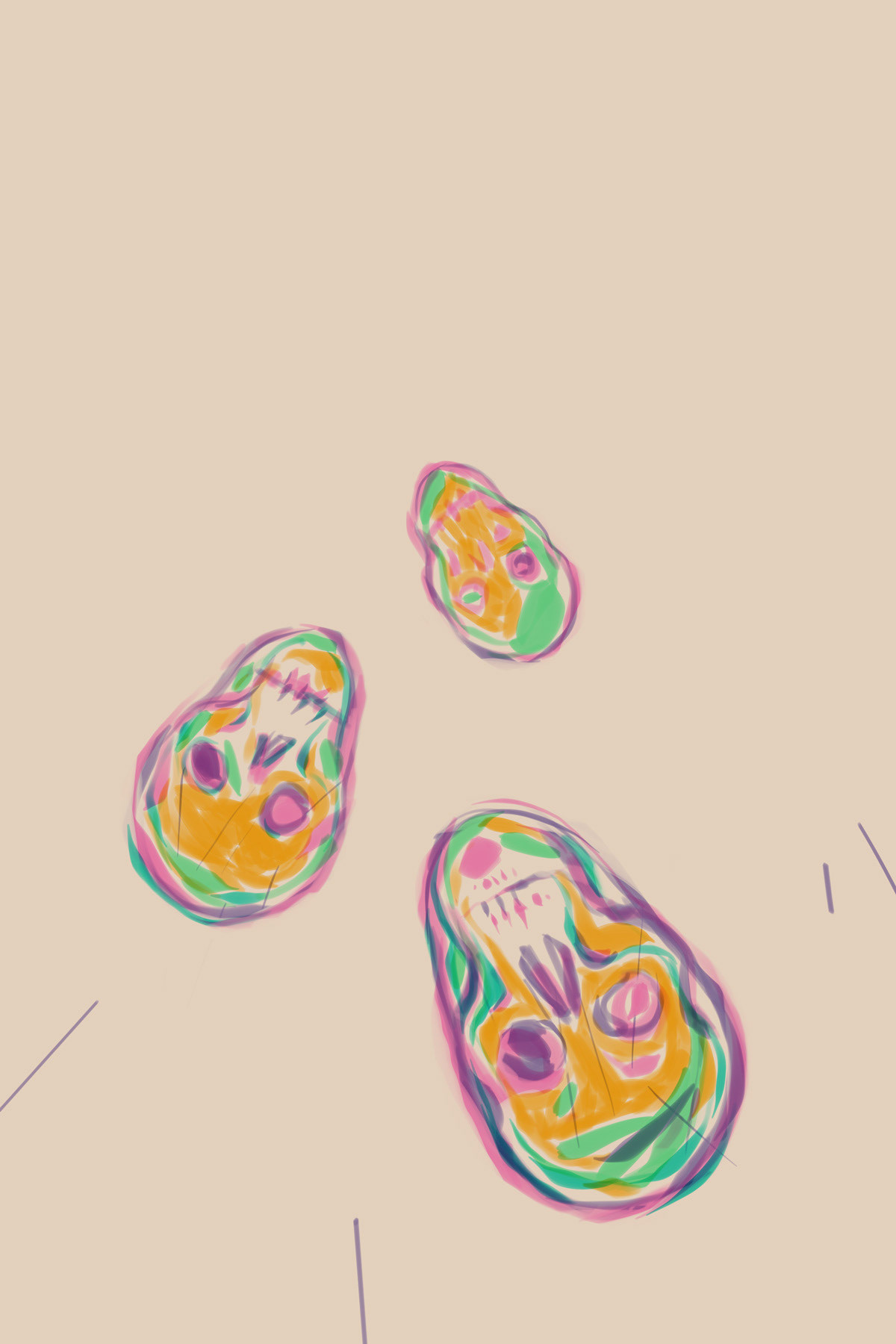
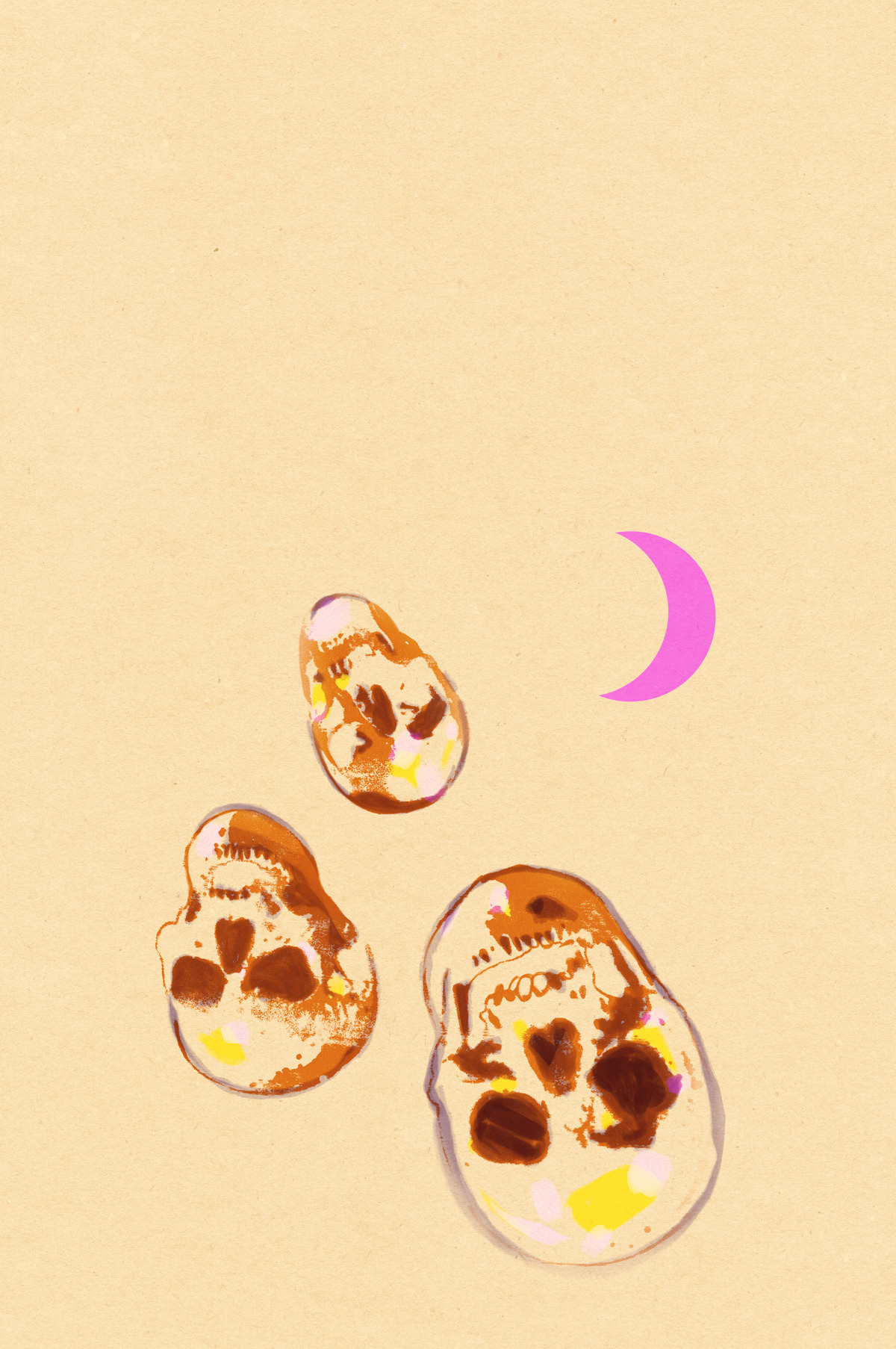
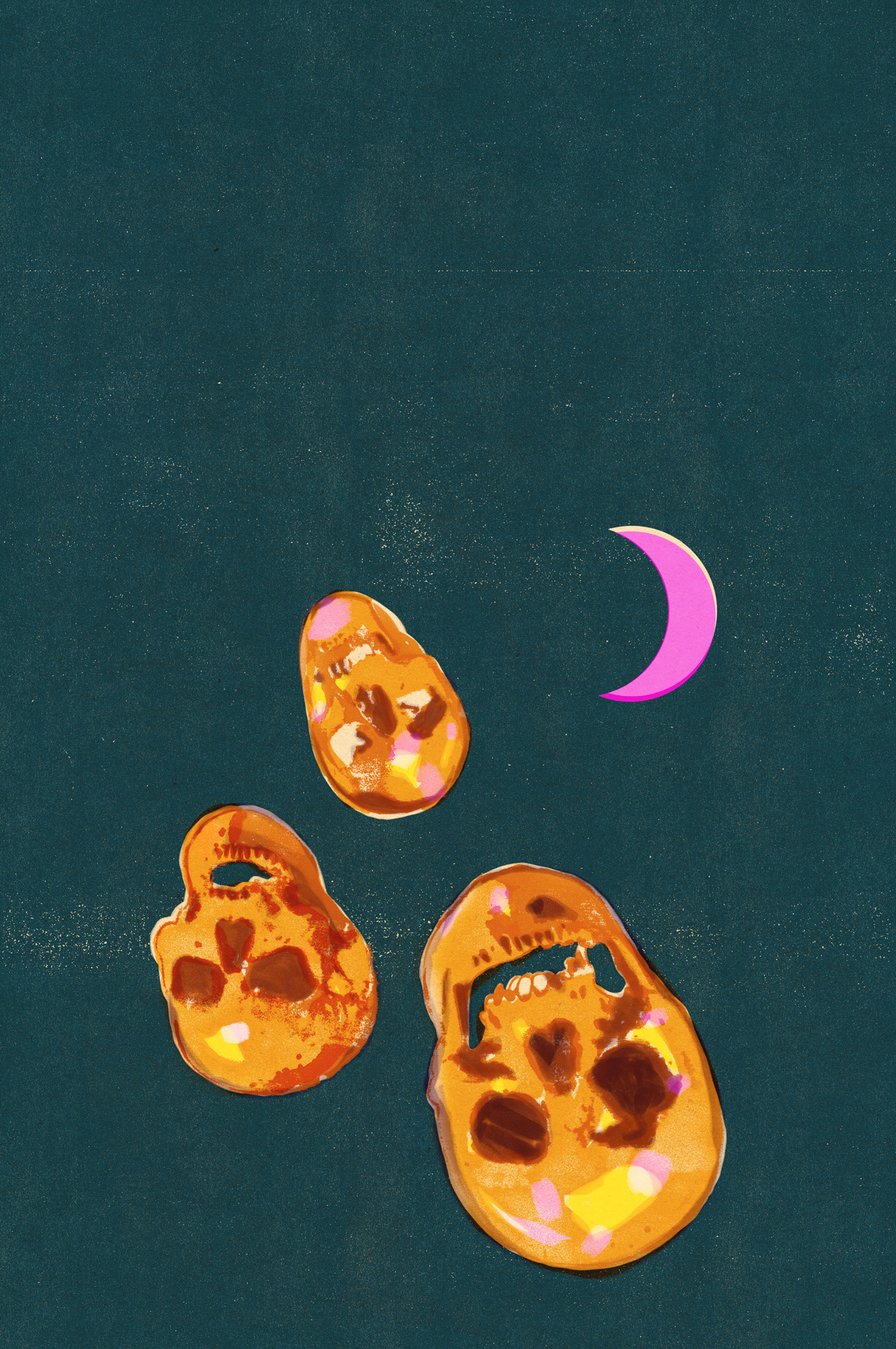
The cover illustration alludes to a specific scene in the book during the bombardment of Dresden, experienced by American prisoners of war deep underground in German bunkers. The soldiers can’t see the destruction raining from the sky, but they can hear and feel everything.
Below: initial sketch, filtered and reworked version and the final result
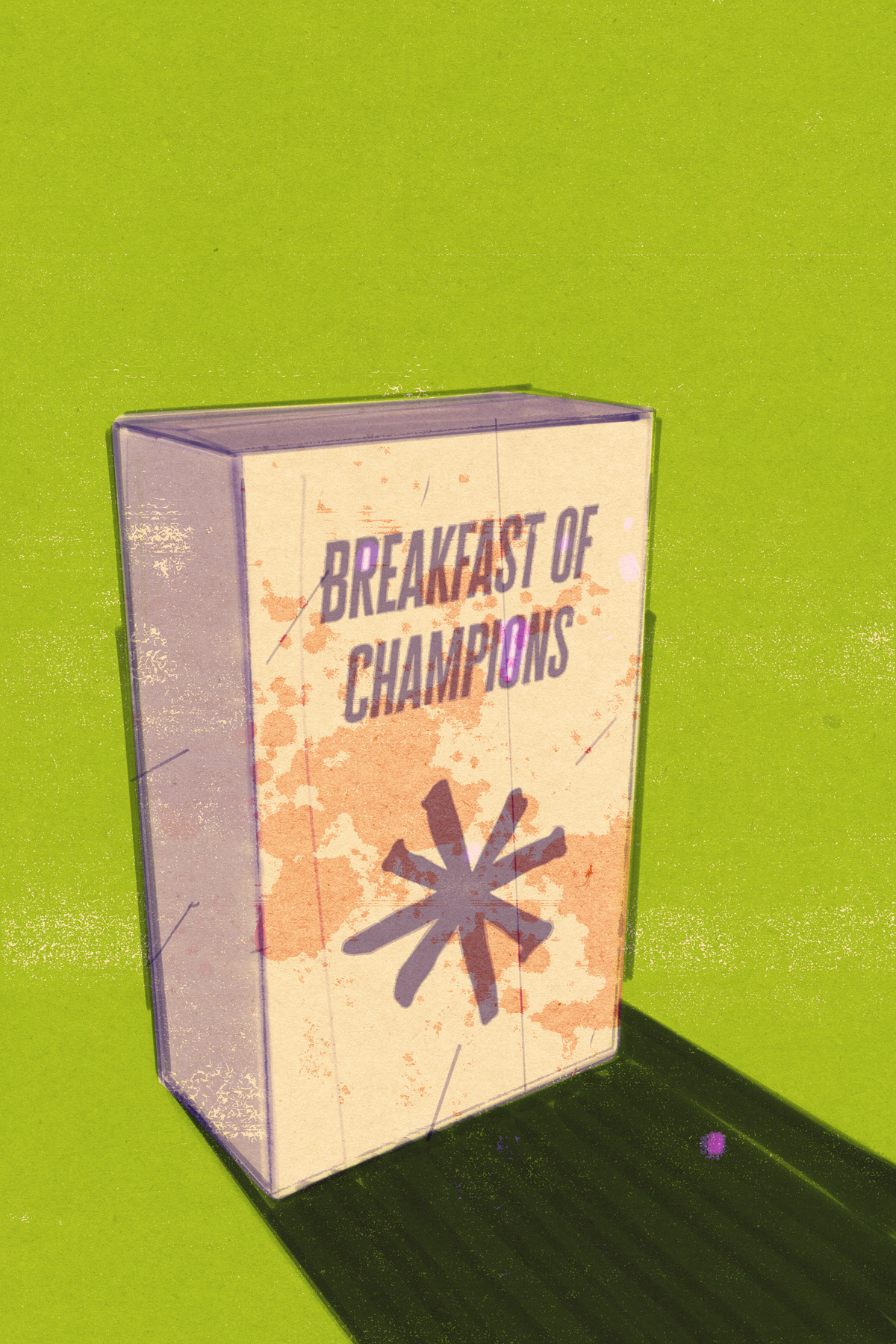
Breakfast of Champions
Breakfast of Champions is one of Vonnegut's most experimental and self-referential novels. The story brings together two seemingly unrelated characters: Dwayne Hoover, a wealthy businessman experiencing a mental breakdown, and Kilgore Trout, an obscure science-fiction writer whose ideas profoundly affect those who encounter them.
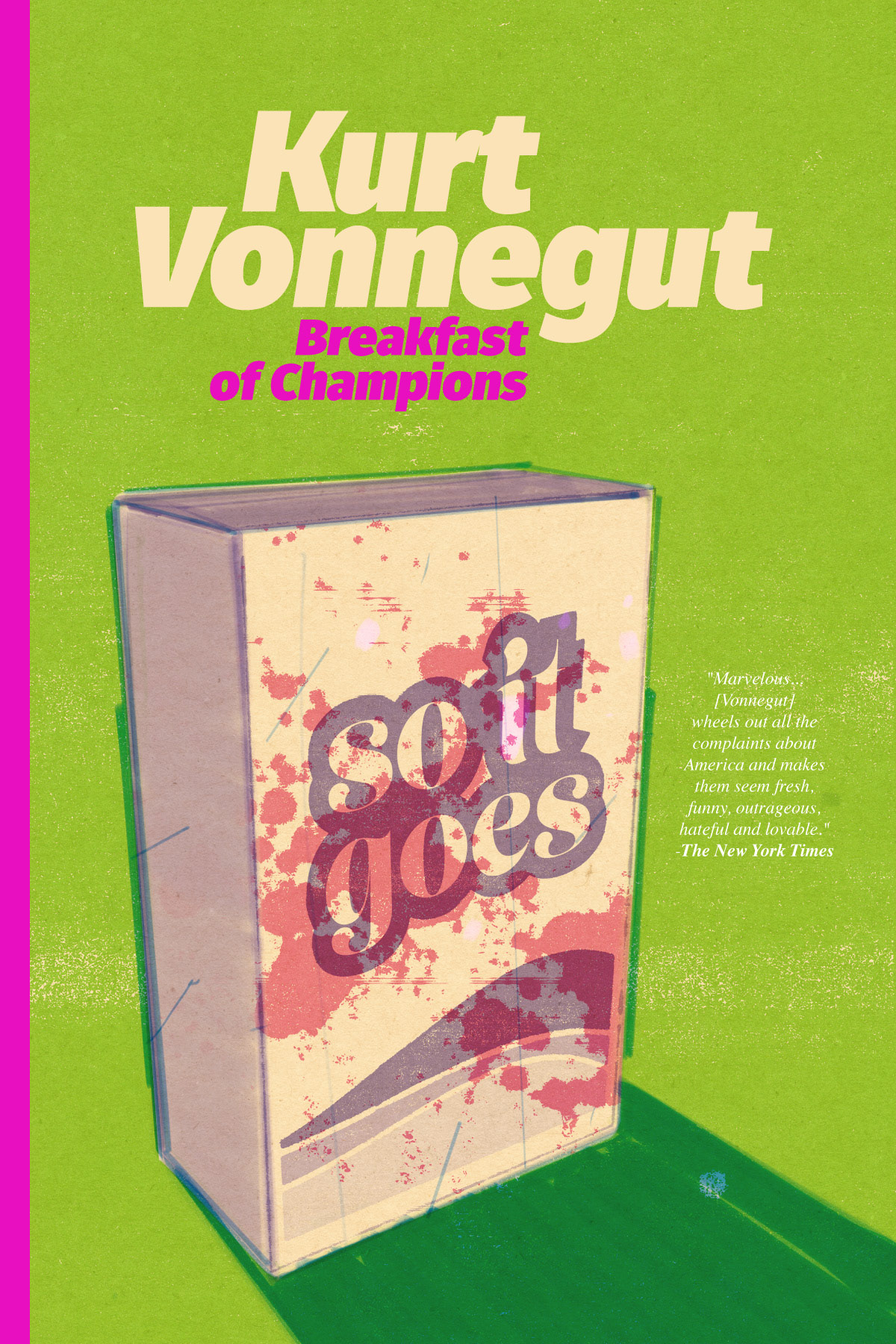
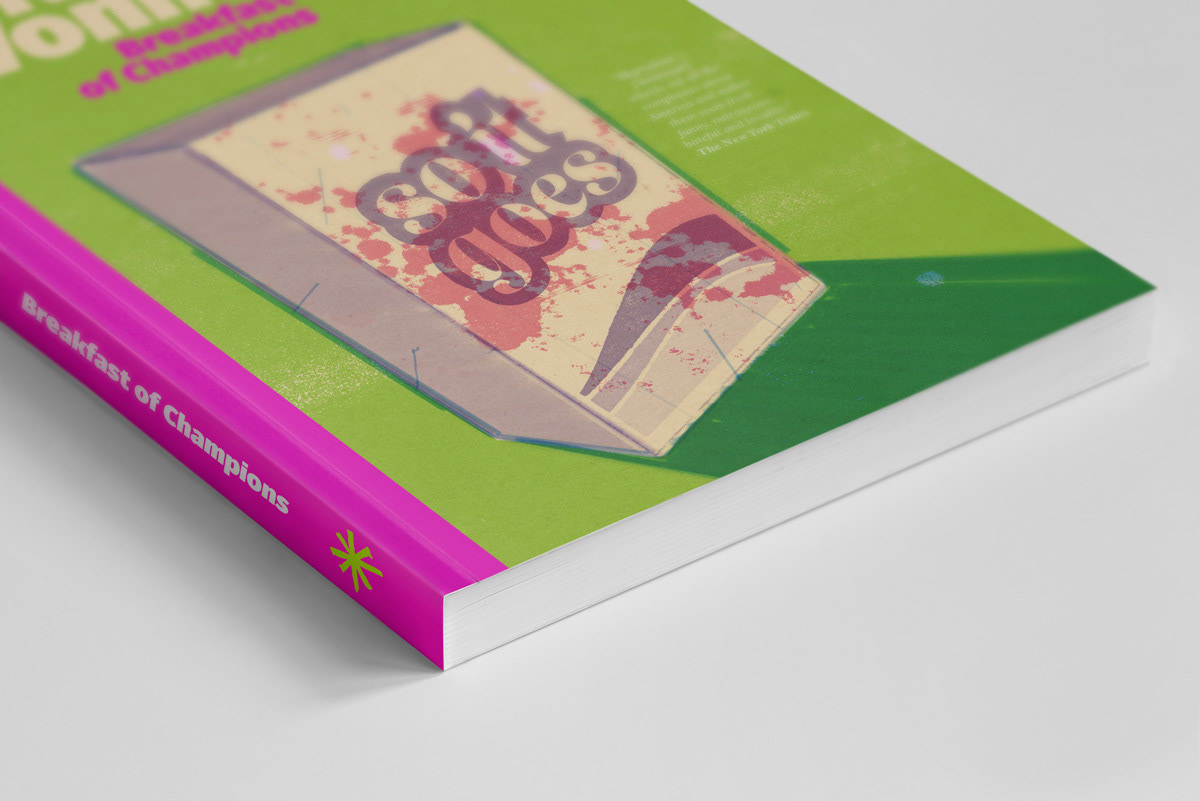
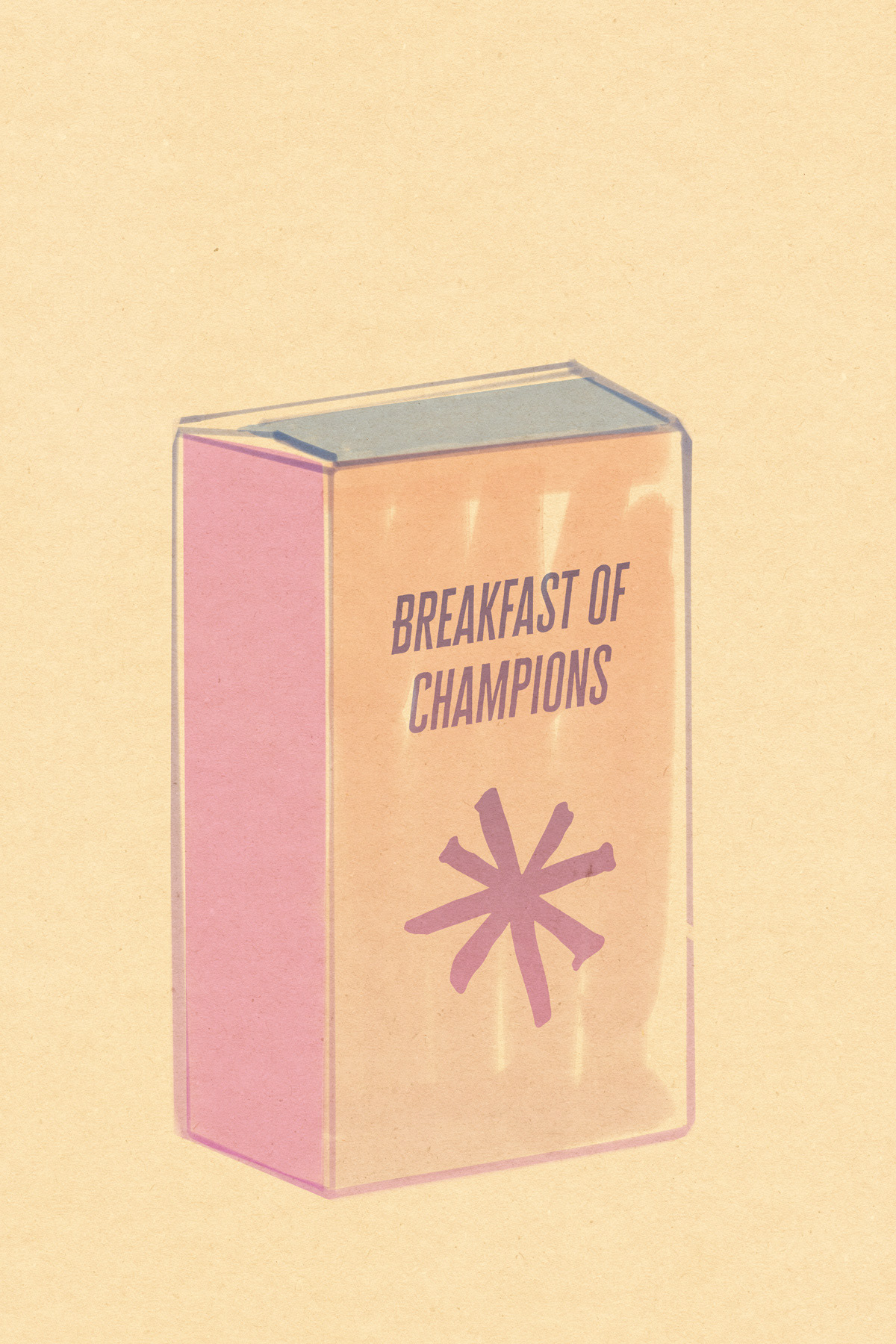
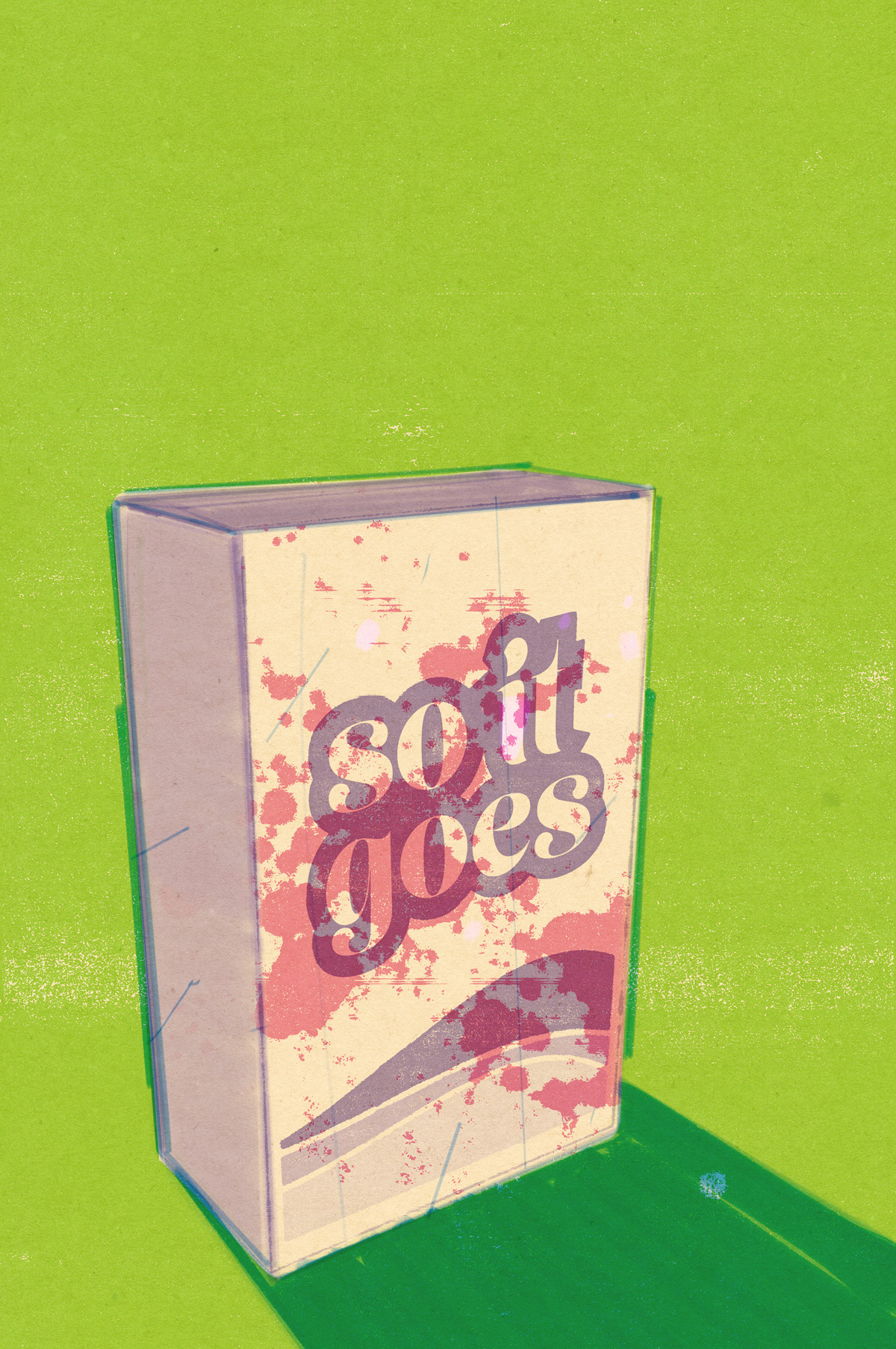
The box of serial depicted on the cover with blood splattered all over it relates to recurring theme in the book, ‘capitalist greatness’ being force-fed down everyone’s throat, which, eventually leads to an apparently inescapable tragedy, when disillusioned with his life Hoover decides to go on a killing spree.
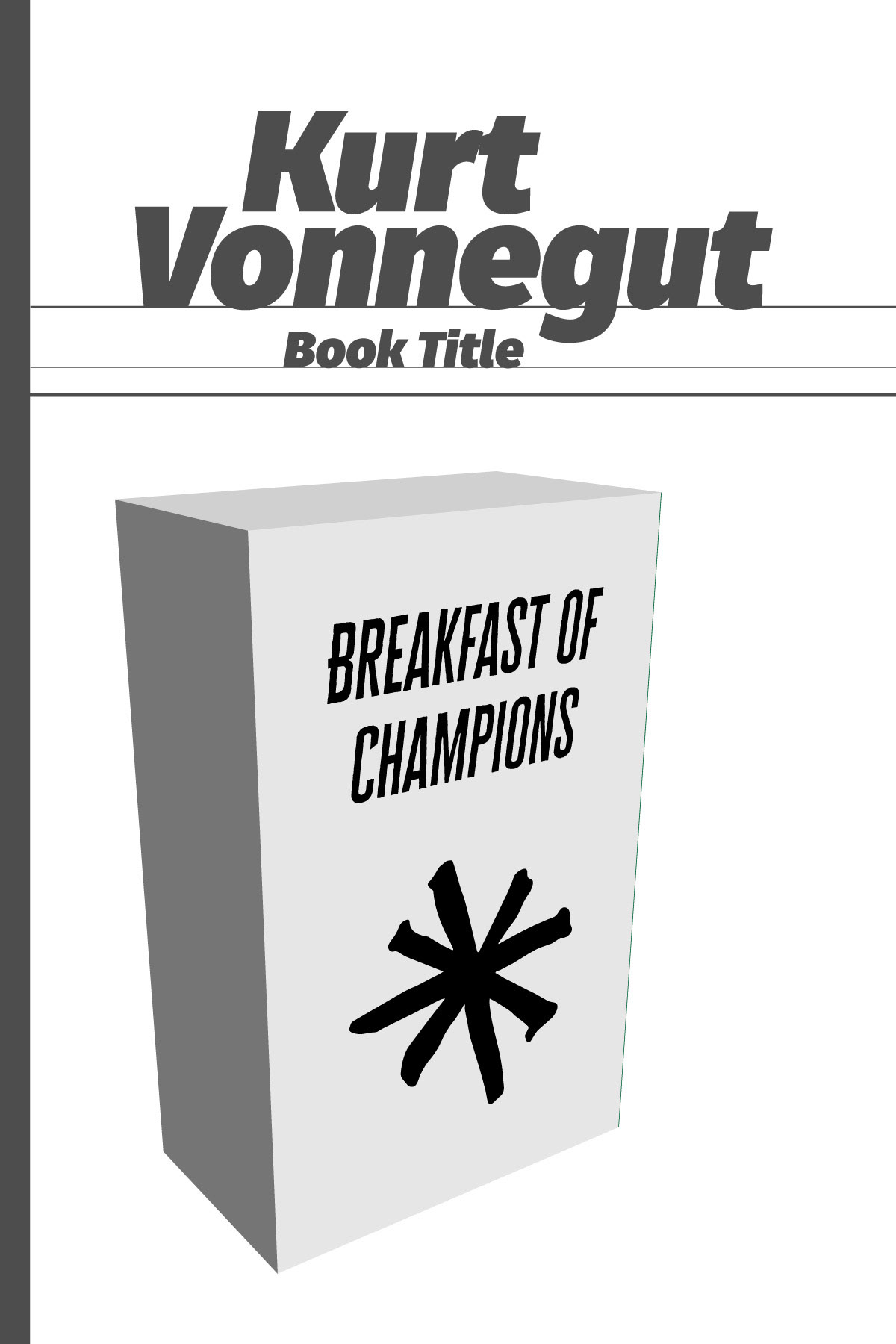
Below: initial concept, 3D model, advanced sketch with filters and final version with a recurring slogan from the book.
Top view: